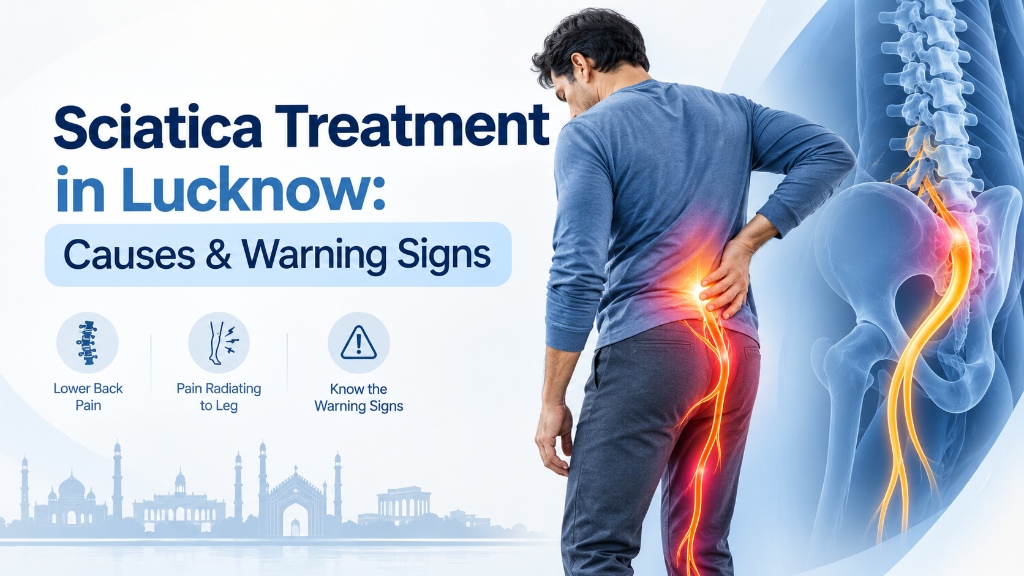
It starts as an ache in your lower back. Then a sharp, electric pain runs through your buttock and shoots down your leg. Sitting becomes unbearable, sleep gets broken, and even a short drive feels like a struggle.
That is classic sciatica, and while it often improves with conservative care, there is one critical situation where waiting can cost you dearly.
Sciatica is not a standalone disease. It is a neurological symptom caused by irritation, inflammation, or mechanical compression of the
sciatic nerve or the lumbar nerve roots (L4, L5, S1) that form it in the lower spine. The pain typically affects one leg, traveling below the knee into the calf and foot, often accompanied by burning, tingling, or numbness.
Sciatica occurs whenever spinal structures compress or inflame the exiting nerve roots:
•
Herniated (Slip) Disc (PLID): The most frequent cause in young and working adults. Prolapsed disc material breaks through the outer annulus and presses against the adjacent spinal nerve root.
•
Lumbar Canal Stenosis: Degenerative narrowing of the spinal canal or exit foramen, more common in patients over 50.
•
Spondylolisthesis: A condition where one lumbar vertebra slips forward over another, pinching the traversing nerve roots.
• Piriformis Syndrome: Spasm or tightness in the deep piriformis buttock muscle that irritates the sciatic nerve.
• Trauma, Infection, or Tumour: Less common causes such as vertebral fractures, discitis, or spinal neuro-oncology that require specialized MRI investigation.
Classic sciatica symptoms include:
• Sharp, electric, or burning pain radiating from the lower back or buttock down the back or side of the leg.
• Pain aggravated by prolonged sitting, coughing, sneezing, or bending forward.
• Pins-and-needles paresthesia, tingling, or numbness in the leg, calf, or foot.
• Motor weakness, such as difficulty lifting the front of the foot or difficulty standing on your toes.
Most acute episodes of sciatica improve within a few weeks with sensible, evidence-grounded non-surgical care:
1. Stay gently active: Prolonged strict bed rest weakens core spinal muscles and tends to worsen sciatica. Gentle walking maintains blood circulation.
2. Temperature therapy: Use cold ice packs during the first 48 hours to reduce acute nerve inflammation, followed by warm compresses to relax tight back muscles.
3. Prescribed medications: Short courses of anti-inflammatory medications, muscle relaxants, and neuropathic pain relievers taken strictly under a doctor's guidance.
4. Guided physiotherapy: Begin structured stretching, neural flossing, and core stabilization once the acute burning pain begins to ease.
5. Ergonomic posture adjustments: Avoid soft low sofas, maintain lumbar support while sitting, and take movement breaks every 30 to 45 minutes.
Do not wait for these red flag symptoms to settle by themselves—they indicate severe neural compromise requiring immediate neurosurgical assessment:
• Foot Drop or Motor Weakness: Inability to lift your foot, tripping over your toes, or sudden buckling of your knee while walking.
• Loss of Bladder or Bowel Control: Incontinence or urinary retention—this is a surgical emergency called Cauda Equina Syndrome that requires decompression within 24 to 48 hours to prevent permanent paralysis.
• Saddle Anesthesia: Numbness or loss of sensation in the groin, buttocks, or inner thighs.
• Intractable, Unbearable Pain: Severe radiating pain that does not respond to oral analgesics and prevents sleep or standing.
• Pain Following Trauma: Back and leg pain following a high-impact fall or road traffic accident.
• Pain Accompanied by Systemic Signs: Sciatica accompanied by unexplained fever, rapid weight loss, or a past history of cancer.
Nerves can recover remarkably well when pressure is relieved early, but prolonged severe compression can leave lasting, irreversible muscle weakness or numbness. That is why clinical timing matters.
Accurate diagnosis requires a thorough physical and neurological examination—including testing muscle motor power, reflex changes, and nerve tension signs (such as the Straight Leg Raise test).
When symptoms persist beyond 2 to 4 weeks or when neurological deficits appear, a high-resolution 3T MRI of the lumbar spine is the gold standard imaging modality. The MRI reveals the exact intervertebral level (L4-L5, L5-S1), the direction of disc extrusion, the degree of canal stenosis, and the precise nerve root under compression.
Treatment follows a stepped, progressive pathway tailored to your specific pathology and pain severity:
• First Weeks (Initial Care): Gentle activity, ice/heat packs, and doctor-prescribed medications when pain is bearable and no motor weakness is present.
• Next Stage (Rehabilitation): Guided spinal physiotherapy, posture correction, and hamstring/piriformis stretching once acute discomfort subsides.
• If Pain Persists (Targeted Interventions): Transforaminal epidural injections or selective nerve root blocks when pain continues despite conservative therapy and MRI shows focal nerve root irritation.
• Selected Patients (Minimally Invasive Surgery): Ultra-minimally invasive endoscopic spine surgery when nerve compression persists despite 6 weeks of conservative care, when motor weakness develops, or in emergencies.
Surgery is never the first choice for sciatica; more than 80% to 90% of patients recover without an operation. Surgery is reserved for clear clinical indications:
1. Progressive neurological weakness (such as foot drop or failing ankle reflex).
2. Intractable, severe leg pain that fails to improve after 4 to 6 weeks of structured conservative care, preventing the patient from working or sleeping.
3. Cauda Equina Syndrome or acute neurological deterioration.
Modern surgical techniques have transformed outcomes. Keyhole endoscopic spine surgery makes neural decompression far gentler, faster, and safer than traditional open back surgery.
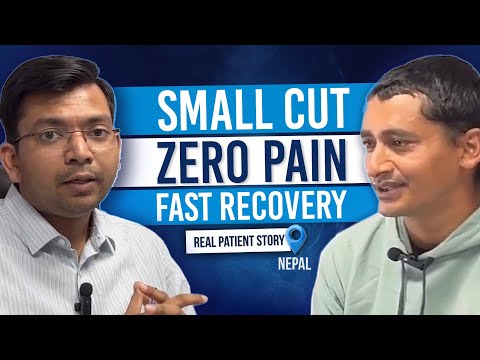
Endoscopic spine surgery is an advanced, ultra-minimally invasive technique to relieve pressure on compressed spinal nerves. Rather than creating a large 2 to 5 inch incision, cutting through paraspinal back muscles, and removing bone (laminectomy), the surgeon works through a sub-centimeter 7mm keyhole portal.
Using a slender optical endoscope with continuous sterile fluid irrigation and 4K optical magnification, micro-instruments selectively extract the herniated disc fragment or shave down bone spurs pressing against the nerve.
Candidates for
endoscopic discectomy typically have leg-dominant sciatic pain that matches an MRI-confirmed disc extrusion or foraminal stenosis, and which has not responded to non-surgical management.
If you are seeking
advanced endoscopic spine surgery in Lucknow, you can schedule a clinical evaluation with
Dr. Achal Gupta at
Neuron Brain & Spine Centre, Gomti Nagar.
Dr. Achal Gupta (DrNB Neurosurgery, Lilavati Hospital Mumbai; FISS; NSSA) has extensive fellowship training in microscopic and full-endoscopic spine surgery. He thoroughly reviews your 3T MRI scans, examines your neurological status, and explains whether endoscopic surgery is indicated for your case or whether non-surgical rehabilitation remains the safer, better choice.
To schedule an appointment, call +91 7080106535 or visit Neuron Brain & Spine Centre at B-2/1, Vibhuti Khand, Gomti Nagar, Lucknow.
No commercial ranking or marketing award can tell you who is the best doctor for your individual spine condition. The right spine surgeon is the one who diagnoses you carefully, explains your imaging honestly, and matches the least invasive treatment to your problem.
When evaluating spine surgeons, neurosurgeons, or
endoscopic spine specialists in Lucknow, verify these seven standards:
1. Qualification & Registration: A recognized neurosurgical or orthopaedic degree (such as DrNB or M.Ch) with valid National Medical Commission / State Medical Council registration.
2. Spine-Specific Experience: Specialized training in endoscopic spine surgery (PELD, UBE) and regular weekly surgical experience.
3. Thorough Diagnostic Examination: A doctor who personally conducts physical neurological tests and correlates them with your MRI before proposing surgery.
4. Conservative-First Philosophy: A surgeon who clearly explains when surgery is NOT necessary and supports non-surgical therapy.
5. Transparent Communication: The proposed procedure, alternatives, potential risks, expected recovery, and follow-up explained in plain, understandable language.
6. Modern Operating Facilities: Operating in hospitals equipped with precision German 4K endoscopic towers and intraoperative neuromonitoring (IONM).
7. Genuine Patient Reviews: Independent feedback from patients highlighting ethical care, attentive communication, and lasting pain relief.
Both neurosurgeons and orthopaedic surgeons can specialize in spine care. A neurosurgeon is trained extensively in the delicate microneuroanatomy of the brain, spinal cord, and spinal nerve roots, while an orthopaedic surgeon is trained in musculoskeletal bones and joints.
For sciatica and pinched nerve conditions, what matters most is the specialist's dedicated spine fellowship training, regular endoscopic practice, and ethical patient-centered approach. Dr. Achal Gupta is a neurosurgeon and endoscopic spine surgeon in Lucknow who treats sciatica, slip disc, and stenosis with an ultra-minimally invasive approach for suitable patients.
If your leg pain has lasted more than a few weeks, or if you notice any weakness, numbness, or difficulty walking,
schedule an evaluation at
Neuron Brain & Spine Centre in Gomti Nagar, Lucknow.
Early diagnostic clarity is the safest and fastest route to reclaiming your active, pain-free life.
This article is published for general health awareness and patient education. It does not constitute medical advice or a personalized clinical diagnosis. Always consult a qualified spine specialist for individual clinical evaluation and treatment recommendations.