Full-Endoscopic Spinal Canal Decompression in Lucknow, UP
Full-Endoscopic Unilateral Laminotomy for Bilateral Decompression (ULBD) is a state-of-the-art technique for treating central and lateral recess spinal stenosis. Through a unilateral keyhole incision, endoscopic precision burrs and Kerrison rongeurs decompress both the ipsilateral and contralateral sides of the spinal canal while preserving facet joints and posterior midline tension bands.

How This Technique Works
In spinal stenosis, hypertrophied ligamentum flavum and arthritic facet overgrowths choke the neural elements. Traditional open laminectomy removes extensive posterior bone and ligaments, often necessitating spinal fusion with screws and rods. Endoscopic decompression tunnels across the canal underneath the midline structures, achieving thorough bilateral decompression without destabilizing the spine.
Key Potential Advantages
Step-by-Step Surgical Workflow
A methodical operative sequence prioritizing anatomical visualization, sub-millimeter precision, and minimal tissue disruption.
Unilateral Portal Placement
A small keyhole portal is established over the interlaminar window under fluoroscopic guidance.
Ipsilateral Laminar Window
A high-speed diamond burr creates a conservative bone window at the junction of the superior and inferior lamina.
Ligamentum Flavum Resection
The thickened ligament compressing the traversing nerve roots is carefully detached and removed.
Contralateral 'Over-the-Top' Decompression
The endoscope is angled across the midline beneath the spinous process to safely decompress the opposite lateral recess.
Pulsatile Neural Confirmation
Direct visual verification of free, pulsating dural sac and bilateral exiting/traversing nerve roots.
Hemostasis & Closure
Micro-bipolar radiofrequency hemostasis followed by cosmetic layered closure.
Patient Selection & Considerations
Optimal outcomes depend on careful patient selection, precise imaging correlation, and realistic recovery expectations.
Who May Be Considered?
- Lumbar spinal stenosis causing neurogenic claudication (inability to walk prolonged distances)
- Lateral recess and central stenosis confirmed by MRI
- Patients seeking decompression without instrumentation or fusion
- Elderly or medically complex patients who benefit from minimally invasive, low-physiologic-stress surgery
When It May Not Be Appropriate
- •Gross mechanical spondylolisthesis requiring corrective instrumentation
- •Multi-level severe kyphoscoliosis needing extensive deformity correction
Recovery Milestones
A structured timeline designed to safely restore function and support long-term wellness.
Assisted ambulation; noticeable relief in leg heaviness during standing.
Progressive daily walking regimen without heavy lifting; gradual tapering of analgesics.
Structured rehabilitation focusing on core muscle tone and functional endurance.
Conditions Treated by This Procedure
Explore specific clinical indications and diagnostic criteria addressed with Endoscopic Decompression.
Slip Disc Surgery (Herniated Disc Decompression)
Ultra-minimally invasive 7mm keyhole endoscopic discectomy to remove extruded disc fragments compressing spinal nerves without muscle cutting.
Spondylolisthesis (Vertebral Slip & Spinal Instability)
Displacement of one spinal vertebra slipping over the bone below it, causing spinal canal narrowing, mechanical back pain, and pinched nerves.
Lumbar Spondylosis (Lower Back Degeneration & Facet Arthritis)
Chronic lower back degeneration affecting lumbar discs, facet joints, and endplates, causing stiffness, localized ache, and secondary canal narrowing.
Related Clinical Articles & Insights
Evidence-based surgical insights and recovery guides written by Dr. Achal Gupta.
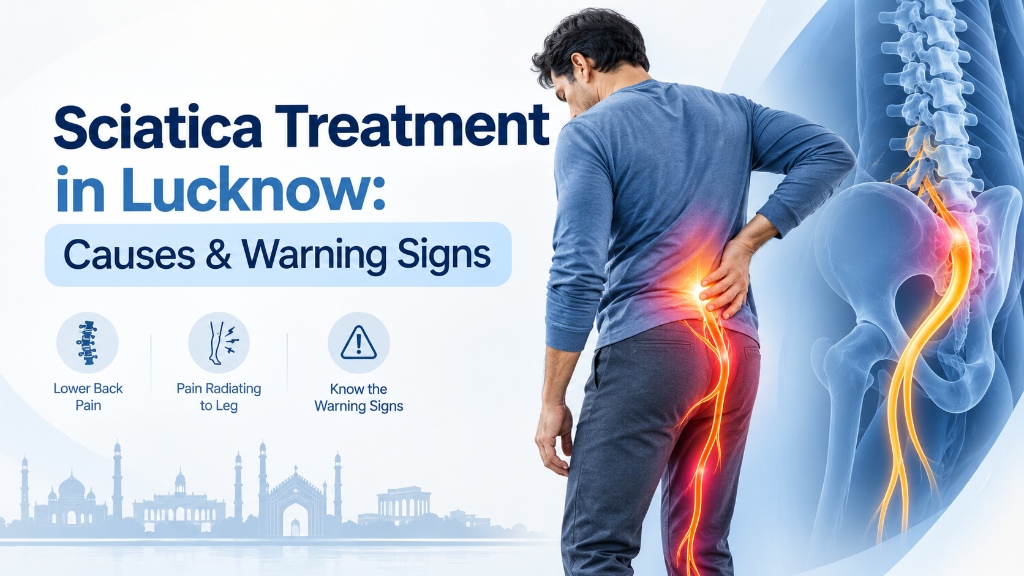
Sciatica Shooting Down Your Leg? The Warning Sign That Means Stop Waiting and See a Specialist Today
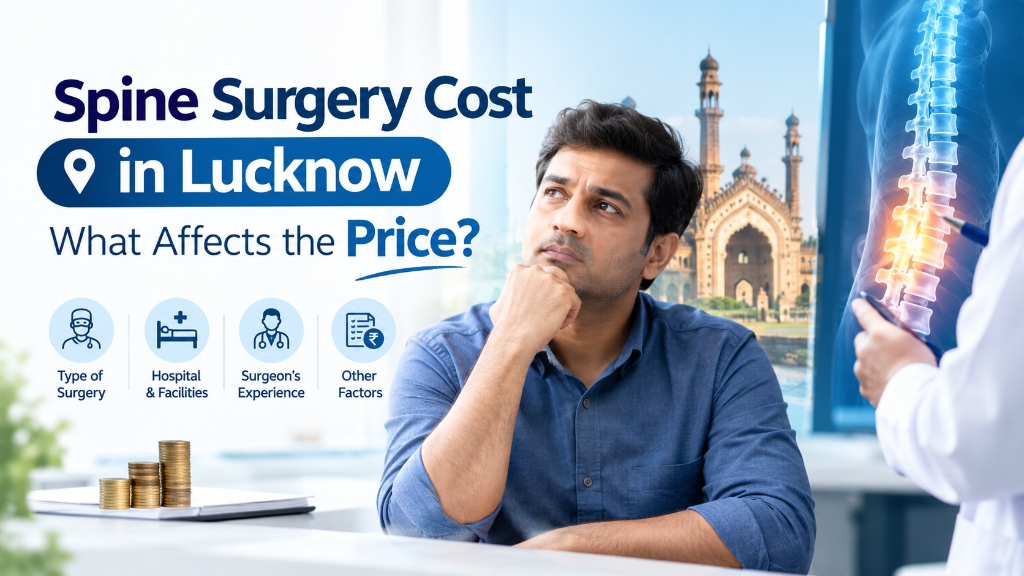
Spine Surgery Cost in Lucknow: What Nobody Explains Upfront (and How to Avoid Surprise Bills)
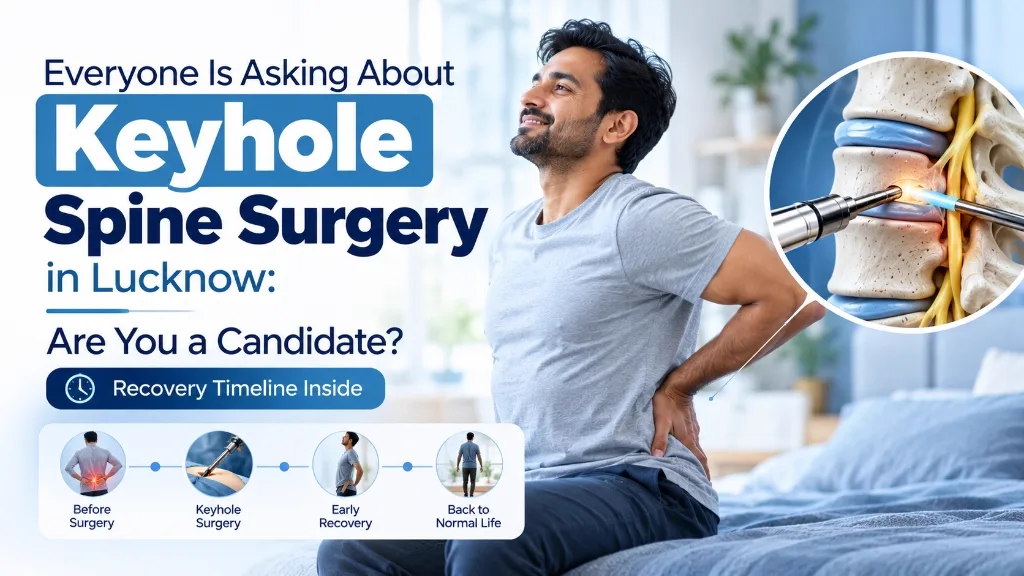
Everyone Is Asking About "Keyhole" Spine Surgery in Lucknow: Are You a Candidate? (Recovery Timeline Inside)
Patient Recovery & Outcomes
Hear directly from patients who underwent Endoscopic Decompression.
Patient M. S. (60s)
Lumbar Spinal Stenosis with Neurogenic Claudication
“Being able to walk through the neighborhood again without having to stop every few minutes has made a tremendous difference in daily life.”
Outcome: Endoscopic decompression relieved the compression on both sides of the canal through a single miniature portal without requiring metal instrumentation or fusion. Walking tolerance steadily improved through guided post-operative physical therapy.
Questions About Endoscopic Decompression
Consult with Dr. Achal Gupta for Precision Spine & Neuro Care
Whether you are seeking definitive relief from severe sciatica, slipped disc, or exploring minimally invasive endoscopic alternatives, we are here with ethical, compassionate guidance.