
Endoscopic SpinePublished on August 24, 2026
Endoscopic vs. Traditional Open Spine Surgery: Which is Right for You?
Explore how 7mm ultra-minimally invasive endoscopic spine surgery preserves back muscles, eliminates large scars, and enables same-day discharge compared to open surgical incisions.
AG
Dr. Achal Gupta
Senior Neurosurgeon & Endoscopic Spine Specialist
Surgeon's Key Clinical Takeaways
- Endoscopic surgery preserves natural spinal stability with zero muscle resection.
- Over 95% of endoscopic patients walk independently within 2 to 4 hours post-procedure.
- Band-Aid size incision means zero stitches to remove and virtually zero surgical scar.
The Evolution of Modern Spine Surgery
Traditional open spine surgery has long been associated with fear among patients due to post-operative pain, long scars, and protracted bed rest. In open procedures, the surgeon must cut and detach the robust paraspinal muscles from the vertebral bones to gain visual access to the herniated disc or compressed nerve.
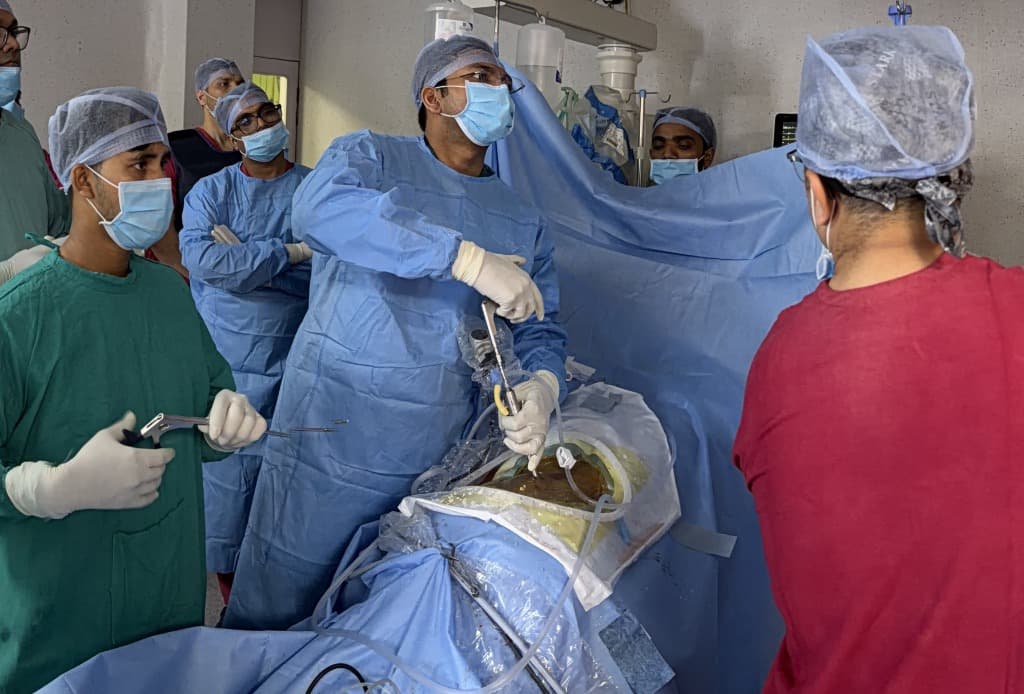
Endoscopic spine surgery completely reimagines this corridor. By using specialized tubular dilators, muscle fibers are gently parted rather than severed. A 7–10 mm working port coupled with continuous fluid irrigation and 4K ultra-high-definition optics allows direct visualization and micro-decompression without structural disruption.
Key Differences at a Glance
• Incision Size: 7mm (Band-Aid size) vs. 70–100mm (large open cut).
• Muscle Injury: Zero muscle resection vs. extensive paraspinal muscle stripping.
• Blood Loss: Less than 10ml with water-buffered irrigation vs. significant blood loss requiring drainage tubes.
• Anesthesia: Local anesthesia with conscious sedation or light general anesthesia.
• Hospital Stay: Same-day discharge (within 12–24 hours) vs. 3 to 5 days of inpatient hospital bed rest.
Who is an Ideal Candidate?
Patients suffering from lumbar disc herniation, sciatica radiating down the leg, spinal stenosis with claudication pain, or recurrent disc prolapse who have not found adequate relief from 6–8 weeks of physical therapy and conservative management are typically prime candidates for endoscopic decompression.
Tags:#Endoscopic Spine#Keyhole Surgery#Minimally Invasive#Sciatica Relief
AG
Dr. Achal Gupta
Lilavati Hospital • DrNB Neurosurgery
Specializing in 7–10mm keyhole endoscopic spine surgery, disc herniations, and spinal stenosis at Neuron Brain & Spine Centre, Lucknow.
Related Articles
Sciatica & Slip Disc
Understanding Sciatica: Causes, Red Flags, and Modern Keyhole Solutions
5 min readElderly Spine CareLumbar Spinal Stenosis in Seniors: Safe, Stentless Relief Without Bone Fusion
7 min readCervical SpineCervical Spondylosis: When Neck Pain Becomes Arm Numbness and Hand Weakness
5 min readNeuron Brain & Spine Centre • Gomti Nagar, Lucknow
Consult with Dr. Achal Gupta for Precision Spine & Neuro Care
Whether you are seeking definitive relief from severe sciatica, slipped disc, or exploring minimally invasive endoscopic alternatives, we are here with ethical, compassionate guidance.
Neuron Brain & Spine Centre • B-2/1, Vibhuti Khand, Gomti Nagar, Lucknow
•Mon – Sun Consultation Hours Available